
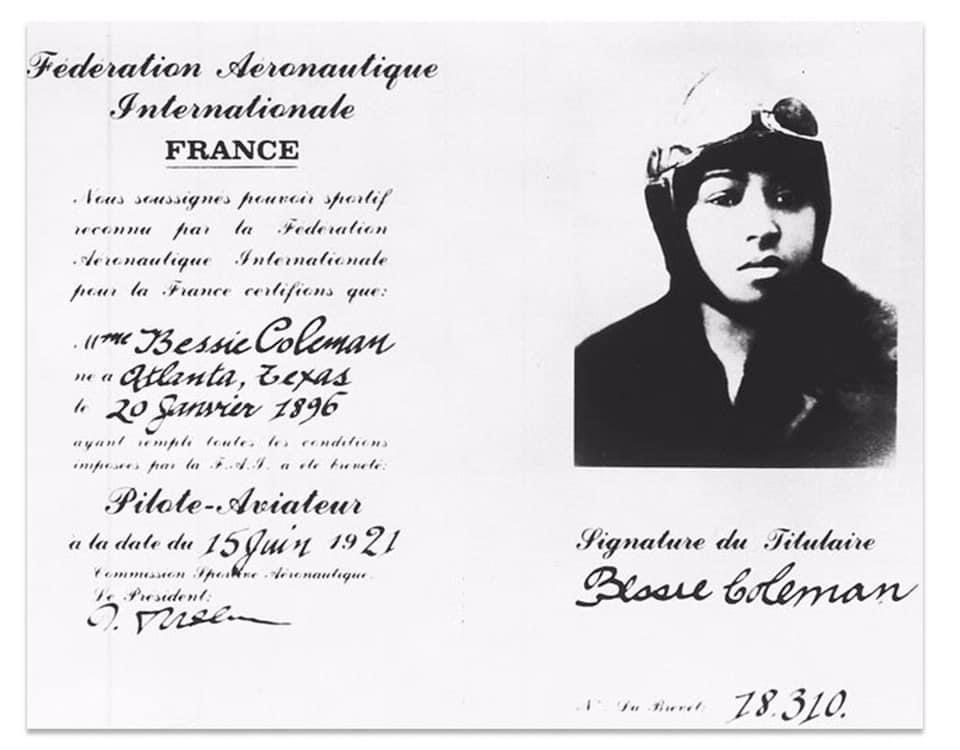
On June 15, 1921, brilliant aviator Bessie Coleman made history in France by becoming the very first African American woman and the first person of Native American descent to earn an international pilot’s license. Barred from entering American flight schools due to the oppressive Jim Crow segregation and rampant gender discrimination of the era, Coleman refused to abandon her dreams of flight, teaching herself French and traveling to Paris to seek training. She enrolled in the prestigious Fédération Aéronautique Internationale, mastering dangerous aerial maneuvers and cross-country navigation in a vintage biplane.
Upon her triumphant return to the United States, Coleman used her hard-earned license to launch a spectacular career as a premier barnstorming stunt pilot, captivating large, integrated crowds across the country with her daring loops and figure-eights. She fiercely used her newfound celebrity to fight racial barriers, absolutely refusing to perform at any aviation shows that enforced segregated seating for Black spectators. Her tragic death during a practice flight in 1926 cut short her dream of establishing a permanent flight academy for young Black aviators, but her barrier-breaking journey stood as an enduring beacon of courage that inspired a generation of future American pilots.
