
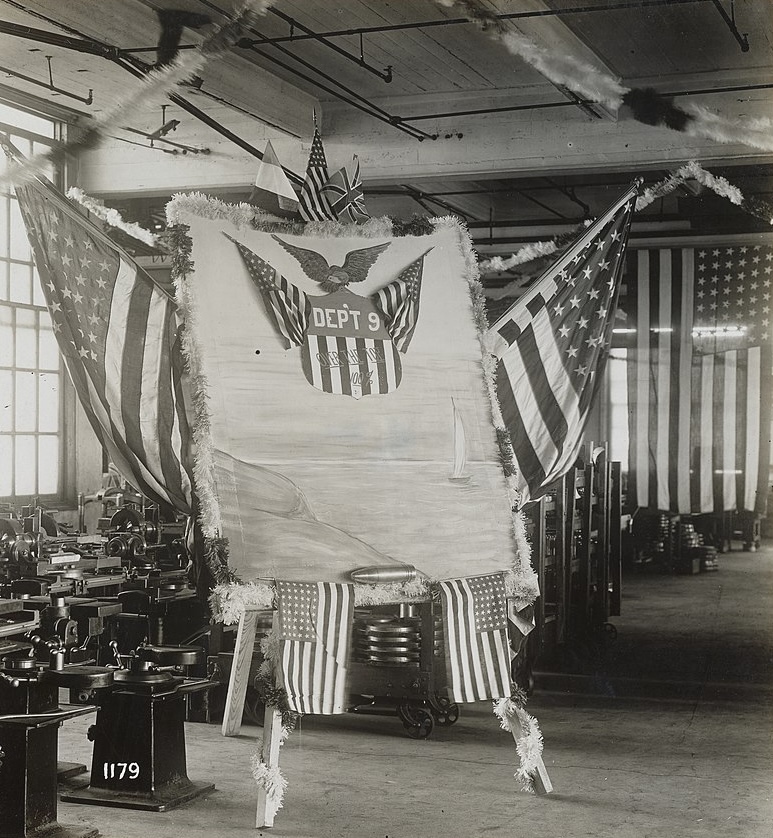
On June 9, 1919, executives and factory workers gathered at the Cincinnati Milling Machine Company in Ohio to tour a massive, patriotic wartime industrial display. The specialized exhibit was constructed to promote the government’s Liberty Loan campaigns, which used striking public graphics, captured military hardware, and factory-floor rallies to encourage everyday industrial workers to invest their wages into government bonds.
While the first four loan drives directly financed the battlefield operations of World War I, this specific 1919 push was part of the “Victory Liberty Loan” campaign launched after the armistice. Recognizing that the sudden end of combat left the government with billions of dollars in unpaid military debt and returning soldiers to care for, the U.S. Treasury pivotally shifted its propaganda strategy. They appealed to postwar national pride rather than wartime fear, transforming factory workshops into patriotic investment centers to successfully stabilize the nation’s transitioning peacetime economy.
