
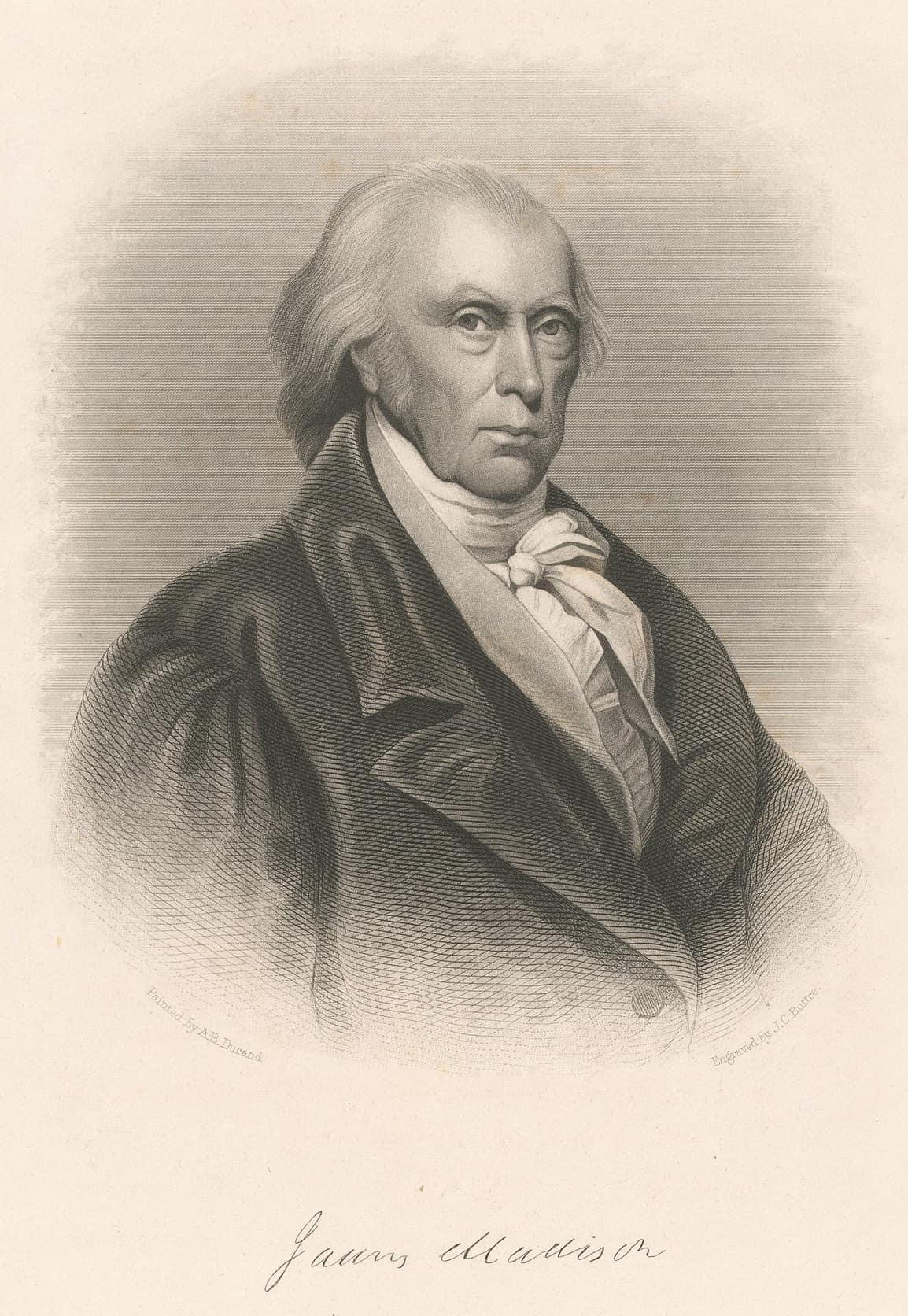
On June 8, 1789, Representative James Madison rose before the U.S. House of Representatives to introduce a package of constitutional amendments that would become the Bill of Rights. Just two years after the signing of the U.S. Constitution, Congress whittled his proposals down to 12 amendments that September. Ultimately, 10 of those amendments were successfully ratified by the states in 1791.
Madison was initially a fierce opponent of a Bill of Rights, publicly arguing that a list of specific liberties was unnecessary and even dangerous because it might imply that any unlisted rights were unprotected. He completely changed his tune during his grueling congressional campaign against James Monroe. Realizing that the fragile new Republic would fracture without a unifying compromise, Madison pivotally shifted from the Bill’s biggest skeptic to its primary author and champion.
