
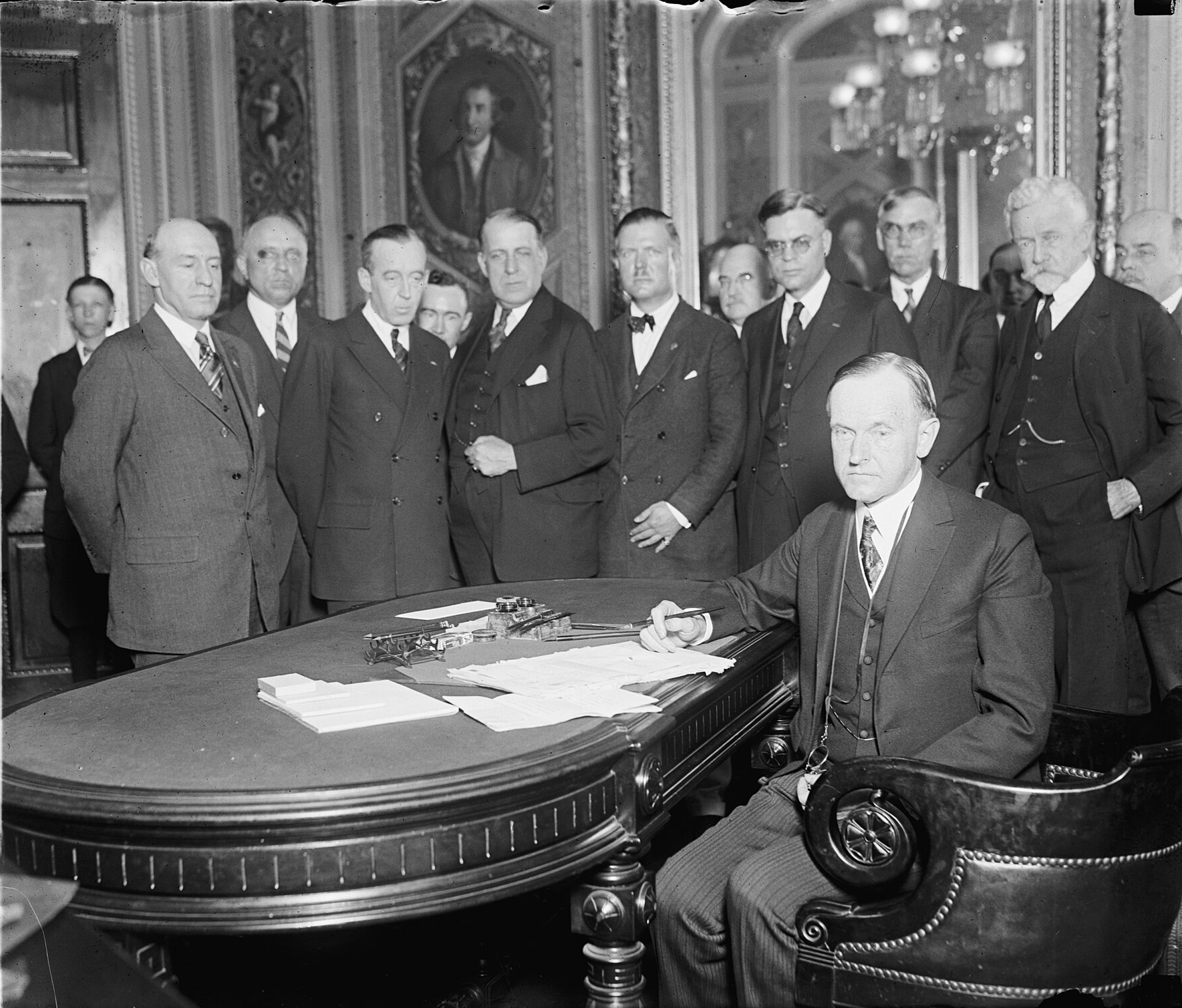
On June 7, 1924, President Calvin Coolidge signed several significant acts of Congress at the U.S. Capitol, including the San Carlos Act—legislation that authorized the federal irrigation project which would later result in the construction of the Coolidge Dam in Arizona. On the same day, he also approved a major amendment to the Narcotic Drugs Import and Export Act, effectively banning the importation of heroin into the United States, and he signed the pioneering Oil Pollution Act of 1924, the first federal law aimed at curbing maritime oil dumping.
Though Coolidge governed with a philosophy of limited federal intervention, these targeted measures reflected a growing national awareness of public health dangers, infrastructure needs, and environmental risks. Together, these acts marked a subtle but meaningful expansion of the government’s regulatory role during a rapidly modernizing era.
