
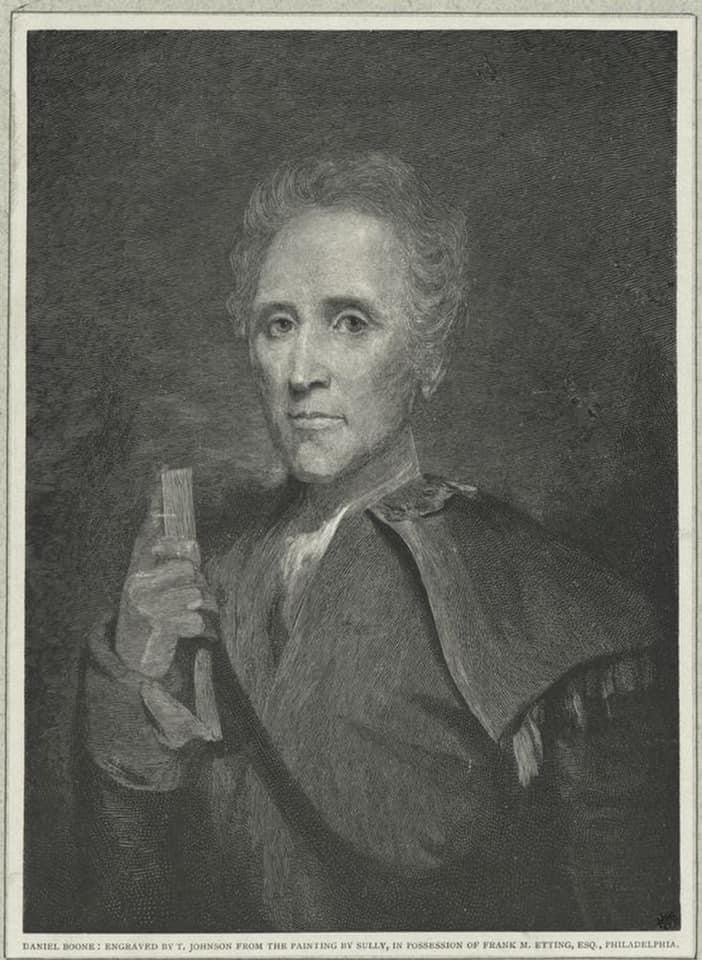
On June 7, 1769, Daniel Boone later recalled first gazing out over the lush, rolling country of present‑day Kentucky after a grueling trek through the Cumberland Gap. Though Indigenous nations had long used this region as a hunting ground, Boone’s passage marked a symbolic moment in the opening of the Appalachian barrier to colonial settlement. (Large‑scale migration into Kentucky accelerated only after 1775, when Boone helped blaze the Wilderness Road.)
Traveling with a small hunting party led by John Finley, Boone acted as both scout and trailblazer, navigating a dangerous but coveted interior landscape that would soon draw thousands of settlers westward. The romanticized portrait of Boone by Thomas Sully, painted decades later, captures the mythic aura that grew around him — a frontier figure whose journey helped transform a contested woodland into the gateway of America’s westward expansion.
