
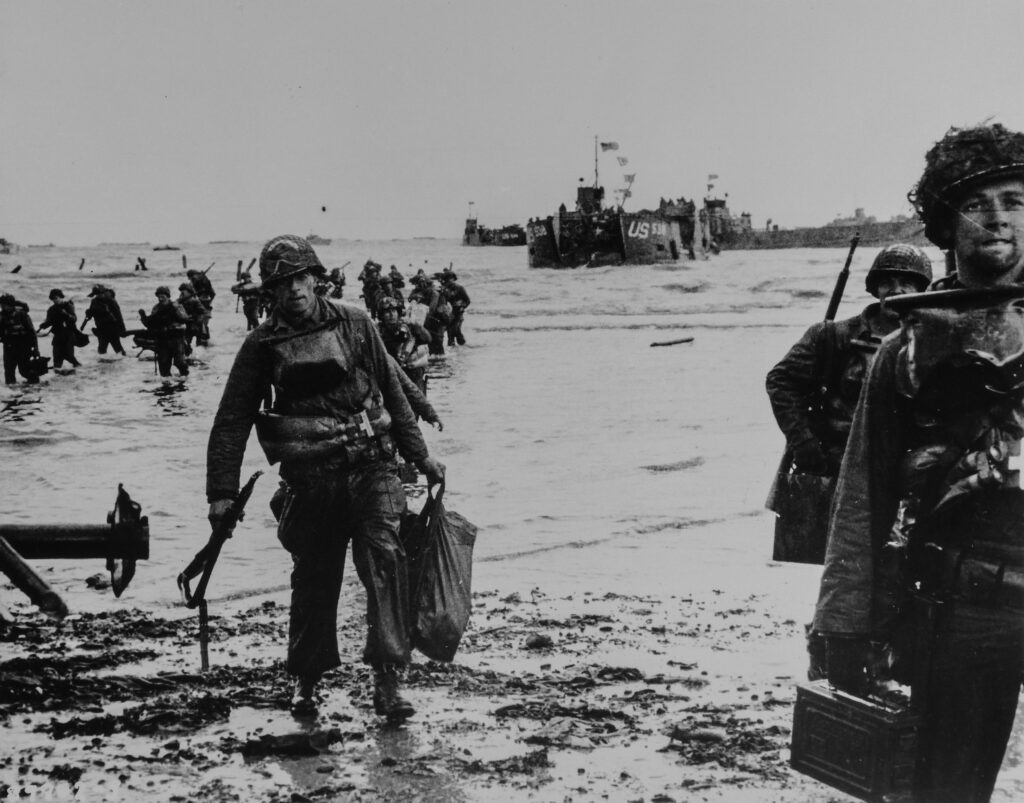
On June 6, 1944, assault troops of the U.S. Army’s 1st Infantry Division and 29th Infantry Division fought their way through the surf toward Omaha Beach, advancing past a waterfront jammed with landing craft. Each man carried 60 to 80 pounds of waterlogged gear—rifles, ammunition, entrenching tools, rations, gas masks—weight that turned every step into a test of balance and survival. Hidden mines, rising waves, and the sucking pull of the shingle, the drag of loose stone and surf that could topple or drown a man under his load, made even the shallow water treacherous; a single stumble could pull a soldier under.
The dark horizon in this photograph is a blend of morning fog and the black smoke of naval gunfire, as Allied warships fired over the heads of the infantry to batter the German bunkers dug into the bluffs above. What makes this frame so compelling is the exposed geometry of the advance: long files of men pushing inland without vehicles, cover, or momentum, threading their way past the towering hull of USS LST‑533 and the scattered wreckage of earlier landings. Survival depended on discipline measured in inches—each forward step a fight against the sea, the weight on their backs, and an enemy waiting beyond the tide line.
