
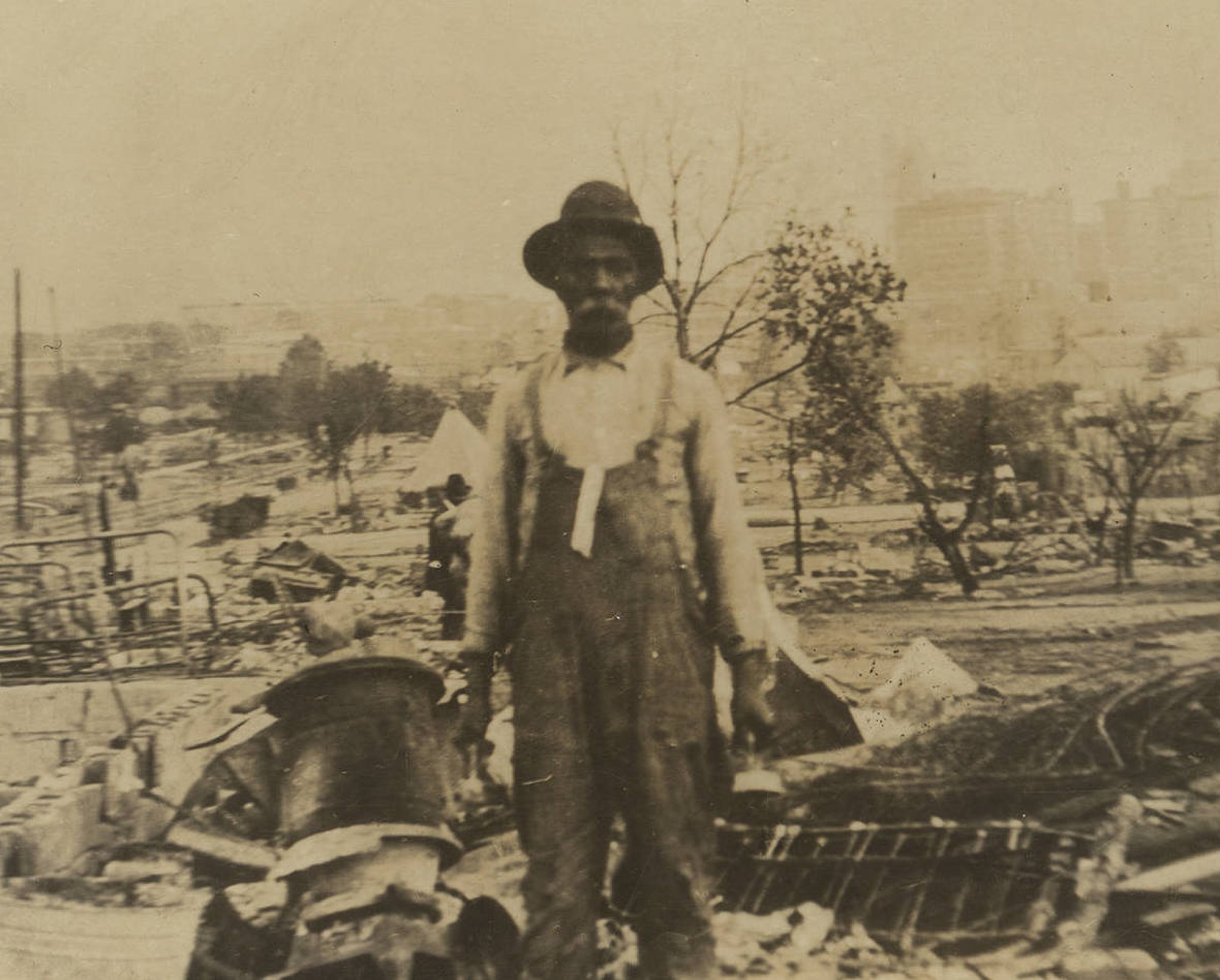
By the morning of June 1, 1921, the prosperous Black community of Greenwood in Tulsa—known as Black Wall Street—lay in ruins. Over the course of a single night, white mobs burned homes, churches, libraries, and businesses, leaving thousands homeless and grieving. The destruction was swift and devastating, erasing decades of hard‑won progress in one of the most successful Black communities in the United States.
Despite receiving no government assistance or insurance compensation, survivors refused to abandon the neighborhood they had built with such pride. Families lived in tents and makeshift shelters as they began the long process of rebuilding, restoring churches, shops, and homes one structure at a time. Their resilience in the face of overwhelming loss remains one of the most powerful testaments to community strength in American history.
