
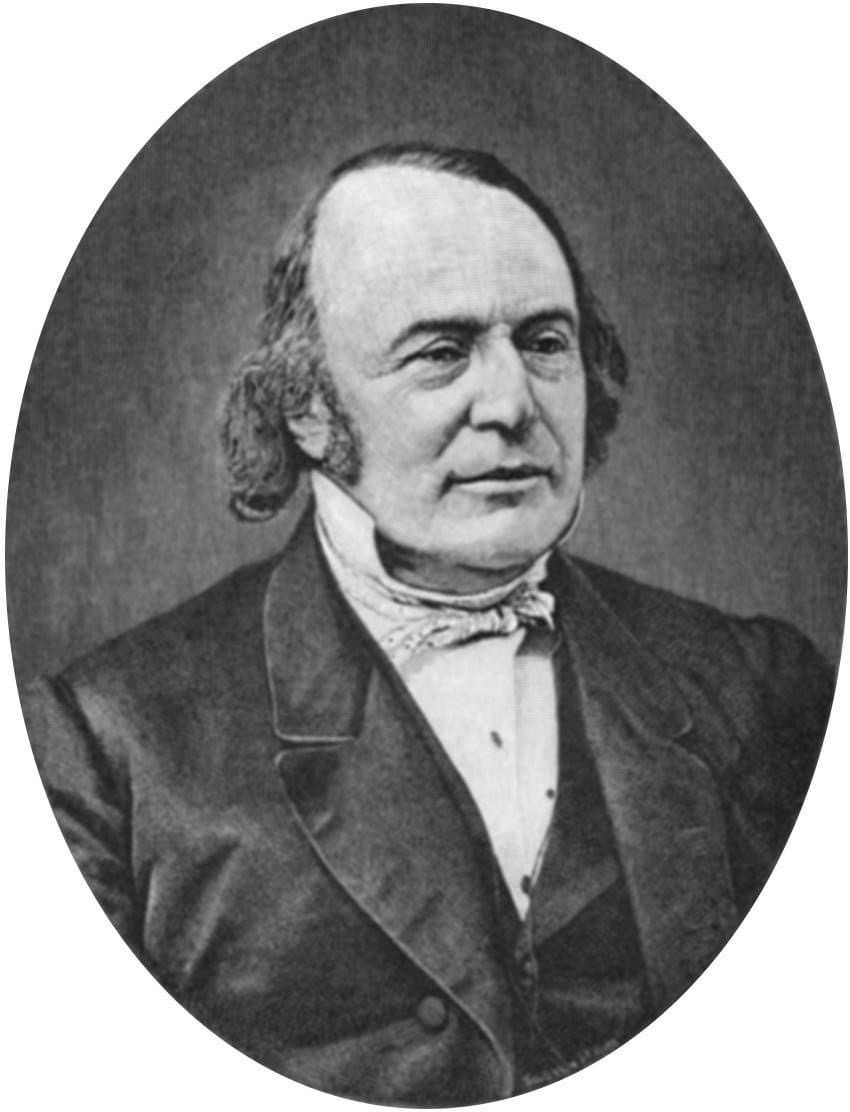
Swiss‑American naturalist Louis Agassiz, born on May 28, 1807, transformed scientific understanding of Earth’s past when he proposed the then‑radical idea that the planet had once been covered by a massive Ice Age. His glacial theory — first unveiled in an 1837 address to the Helvetic Society and later expanded in his 1840 masterwork Études sur les glaciers — overturned long‑held assumptions about geology and reshaped the study of climate and deep time.
After immigrating to the United States, Agassiz undertook an ambitious, decades‑long survey of North American natural history, culminating in his monumental ten‑volume series, Contributions to the Natural History of the United States of America. His influence became so widespread that early American geographers named mountains, glaciers, and even the vast prehistoric Glacial Lake Agassiz in his honor — a permanent geological testament to the scientific reach of a man who redefined how we understand the natural world.
